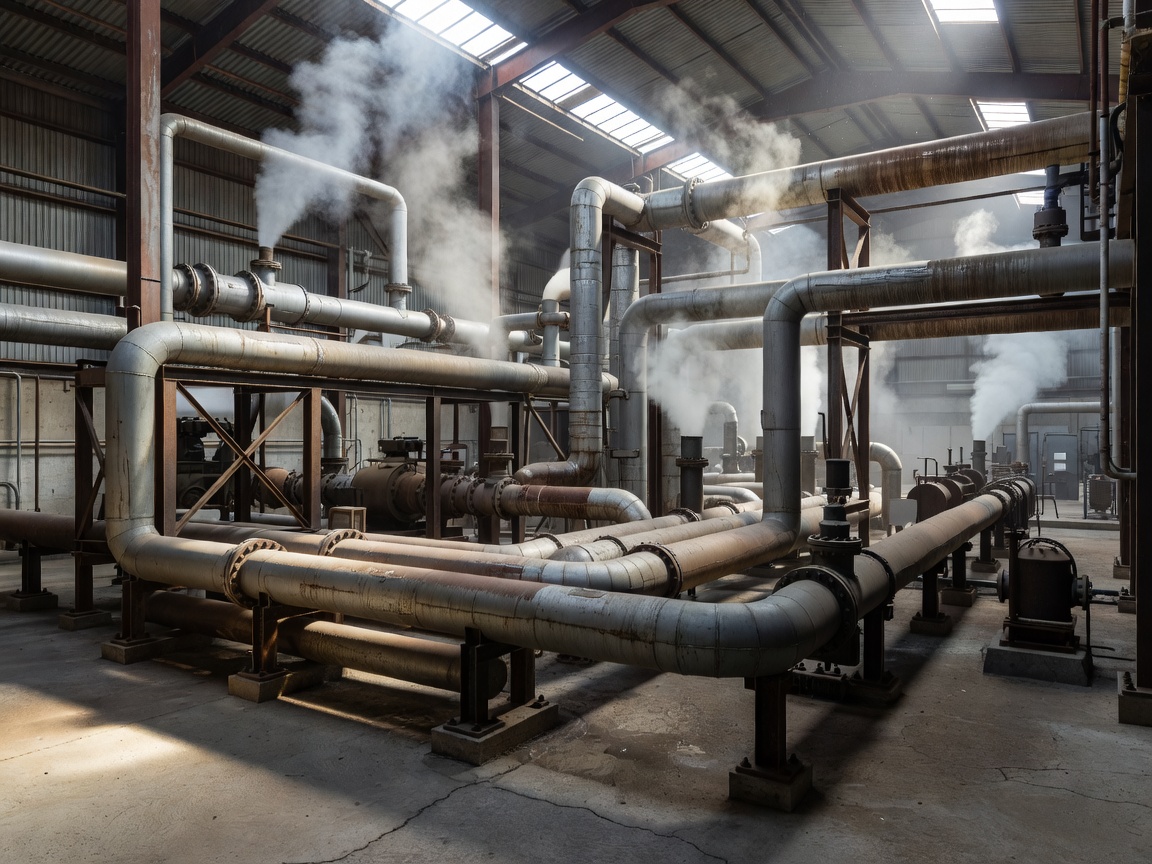
Harnessing Earth's Internal Heat
Geothermal energy utilizes the continuous thermal decay of radioactive isotopes in the Earth's core, which radiates heat outward to the crust. Unlike solar and wind, geothermal resources are available twenty-four hours a day, providing crucial baseload power that stabilizes the electrical grid. The sector spans a wide range of applications, categorized primarily by the depth and temperature of the resource utilized, ranging from shallow domestic heating loops to deep utility-scale power generation.
Shallow Geothermal: Ground-Source Heat Pumps
A few meters below the Earth's surface, the temperature remains remarkably constant year-round, insulated from extreme atmospheric weather. Ground-source heat pumps (GSHPs) capitalize on this thermal inertia. Rather than generating heat through combustion, GSHPs use a fluid loop buried underground to transfer heat into a building during the winter and reverse the process to act as an air conditioner during the summer.
Because GSHPs merely move existing thermal energy rather than creating it from scratch, they operate with remarkable efficiency, often reaching coefficients of performance (COP) between 3.0 and 5.0. This means for every unit of electricity used to run the compressor and pumps, three to five units of thermal energy are delivered to the building. The main barrier to GSHP adoption is the high upfront capital cost associated with drilling boreholes or excavating land for horizontal trench loops.
Deep Geothermal Generation
Utility-scale geothermal power requires much higher temperatures, typically tapping into hydrothermal reservoirs located several kilometers underground. These naturally occurring pockets of steam and hot water are extracted via production wells. The steam drives a turbine directly, or the hot fluid passes through a heat exchanger to boil a secondary working fluid (binary cycle power plants). Once the thermal energy is extracted, the cooled water is injected back into the reservoir to maintain pressure and sustain the resource.
Historically, deep geothermal development was geographically constrained to tectonically active regions—such as the Pacific Ring of Fire—where tectonic plate boundaries bring magma closer to the crust, allowing groundwater to reach boiling temperatures at drillable depths.
Enhanced Geothermal Systems (EGS)
To overcome geographic limitations, the industry is advancing Enhanced Geothermal Systems (EGS). In many parts of the world, deep rock formations possess sufficient heat but lack the natural permeability or fluid necessary for a hydrothermal reservoir. EGS involves drilling into this hot, dry rock and injecting water at high pressure to create fractures, mimicking a natural reservoir. Water is circulated through these fractures to absorb heat before being extracted via a production well.
EGS has the theoretical potential to unlock geothermal power virtually anywhere on the planet. However, the technology borrows heavy engineering techniques from the oil and gas sector (such as directional drilling and hydraulic stimulation), making it highly capital-intensive. Deep drilling remains notoriously expensive, with costs escalating exponentially as depth increases and rock hardness degrades drill bits.
Environmental and Seismic Considerations
Geothermal power boasts one of the smallest land footprints per megawatt of any energy source and produces near-zero carbon emissions in binary closed-loop systems. However, development is not without risks. High-pressure fluid injection associated with EGS has been documented to induce micro-seismicity. While these tremors are usually imperceptible at the surface, operators must employ rigorous geological surveying and pressure management protocols to mitigate the risk of larger induced earthquakes. Additionally, sustainable reservoir management is vital; over-extraction can cause thermal depletion, effectively cooling the reservoir faster than the Earth can reheat it.