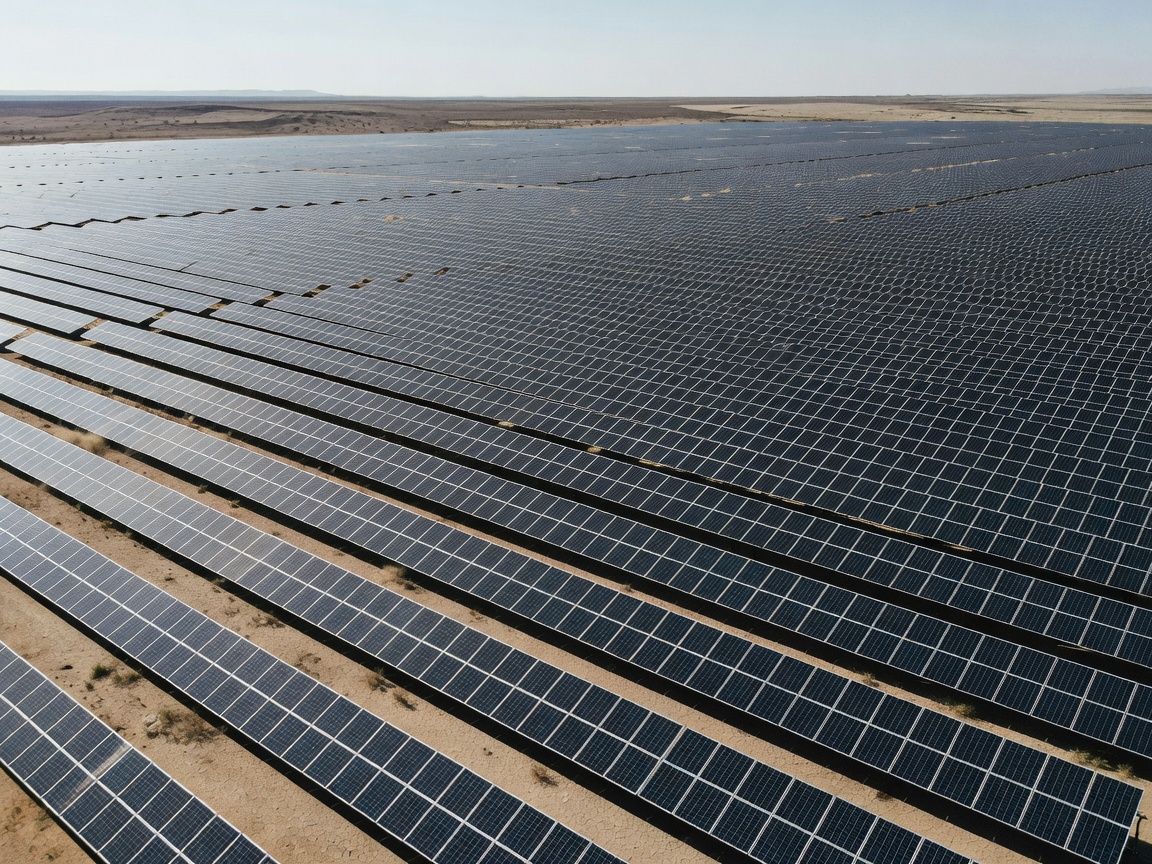
Understanding Photovoltaic and Thermal Systems
Solar power is fundamentally divided into two primary technological categories: photovoltaic (PV) systems and concentrating solar power (CSP). PV systems directly convert sunlight into electricity using semiconductor materials, a phenomenon known as the photovoltaic effect. When photons strike the semiconductor, they knock electrons loose, creating an electrical current. CSP, conversely, utilizes mirrors or lenses to focus a large area of sunlight onto a receiver. The concentrated light is converted to heat, which drives a heat engine (usually a steam turbine) connected to an electrical power generator.
While CSP has distinct advantages in thermal energy storage—allowing it to generate electricity even when the sun is not shining—PV has dominated the global market. The rapid decline in manufacturing costs for silicon-based panels has made PV the default choice for both distributed residential installations and massive utility-scale farms.
Technological Advancements in Solar Cells
The efficiency of a solar panel dictates how much of the incoming solar radiation is converted into usable electricity. Standard commercial monocrystalline silicon panels currently achieve conversion efficiencies between 19% and 22%. Monocrystalline cells, cut from a single, continuous crystal structure, offer higher performance and space efficiency compared to older polycrystalline counterparts.
However, the limits of traditional silicon are fast approaching. The theoretical maximum efficiency of a single-junction silicon cell (the Shockley-Queisser limit) is roughly 32%. To bypass this, researchers are focused on multi-junction cells and tandem perovskite-silicon structures. Perovskite materials, characterized by a specific crystal structure, can absorb different wavelengths of light than silicon. By layering a perovskite cell on top of a standard silicon cell, manufacturers can capture a broader spectrum of solar radiation, pushing commercial module efficiencies toward 30% without drastically increasing manufacturing costs.
Grid Integration and Storage Solutions
The primary critique of solar energy is its intermittency. Peak solar generation occurs during midday, which often does not align with peak electricity demand, which typically happens in the early evening. This misalignment results in a grid load profile commonly referred to as the "duck curve." Utilities face an oversupply of electricity during the day, followed by a steep ramp-up requirement as the sun sets.
Addressing the duck curve requires robust grid integration strategies and large-scale energy storage. Lithium-ion battery systems have become the standard solution for short-duration storage (2 to 4 hours), smoothing out generation fluctuations and shifting midday power to evening peaks. For longer-duration needs, alternative chemistries like vanadium redox flow batteries and mechanical storage solutions (such as compressed air) are being actively developed to ensure grid stability.
Economic Viability and Lifecycle Costs
The Levelized Cost of Energy (LCOE) for utility-scale solar PV has plummeted over the past decade. Economies of scale in manufacturing, streamlined installation processes, and improved module efficiency have collectively driven down capital expenditures. In many regions, building a new utility-scale solar farm is now cheaper than operating existing coal or natural gas plants.
Despite low operational costs, the initial capital outlay remains significant. Soft costs—including permitting, financing, and customer acquisition—represent a substantial portion of residential solar pricing. Streamlining regulatory frameworks and standardized interconnection protocols are critical next steps for reducing these barriers.
Environmental Impact and Material Sourcing
While solar energy generation produces zero direct greenhouse gas emissions, the manufacturing lifecycle carries an environmental footprint. The extraction of quartz, its refinement into metallurgical-grade silicon, and the subsequent purification process require massive amounts of energy, much of which is currently sourced from fossil fuels in industrial centers.
Additionally, the industry is bracing for a future influx of decommissioned panels. A standard panel has a useful life of 25 to 30 years, after which it must be disposed of or recycled. Current recycling infrastructure is insufficient to handle the projected volume of end-of-life modules. Extracting valuable materials like silver, copper, and high-purity silicon from bonded, weather-sealed panels is technically complex and currently lacks strong economic incentives, emphasizing the need for mandated extended producer responsibility frameworks.