The Mechanics of Aerodynamic Generation
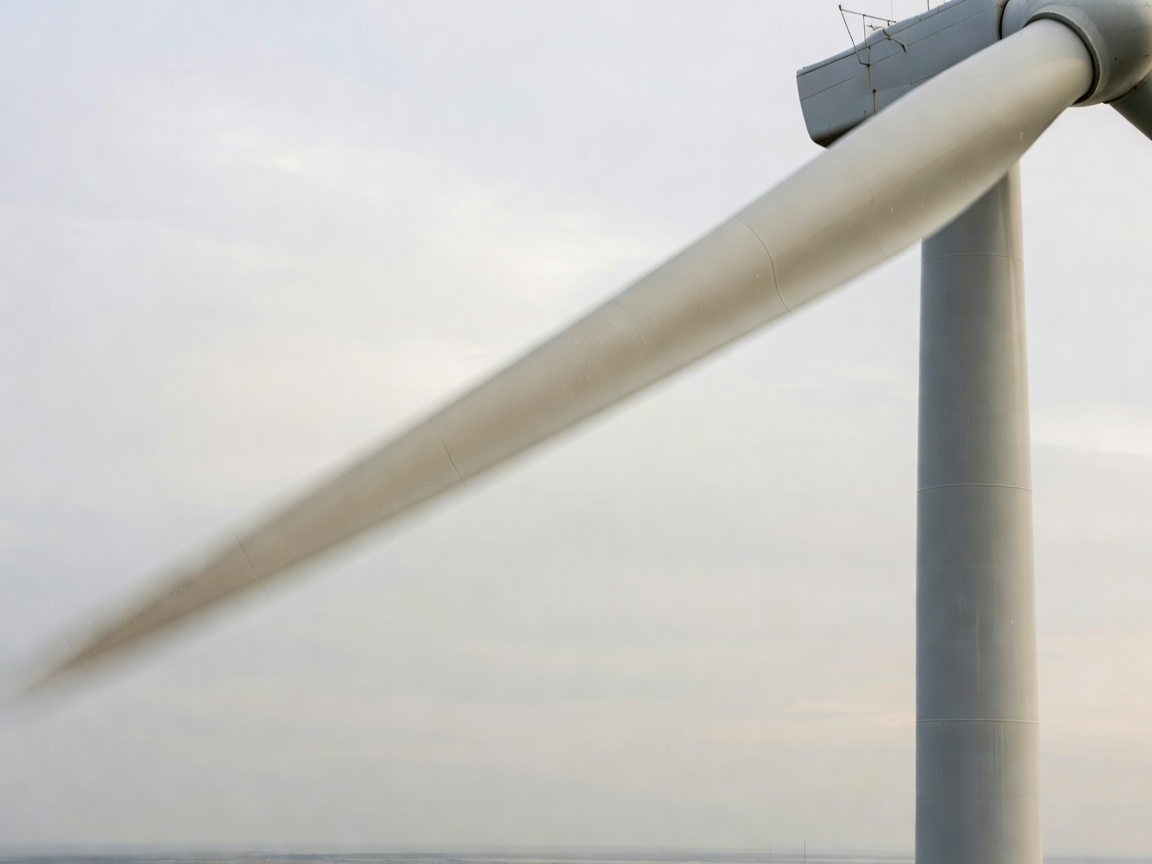
Wind energy harnesses the kinetic power of moving air to rotate aerodynamic blades, which in turn spin a rotor connected to a generator. The fundamental physics of wind power are dictated by Betz's Law, which limits the maximum theoretical efficiency of any wind turbine to 59.3%. Modern utility-scale turbines are highly engineered machines that operate close to this aerodynamic limit, utilizing pitch control and yaw mechanisms to optimize blade angles relative to wind speed and direction.
The power output of a wind turbine is proportional to the swept area of its rotor and the cube of the wind speed. This cubic relationship means that even a minor increase in wind velocity yields a massive increase in generated electricity. Consequently, developers focus intensely on siting turbines in high-wind-resource corridors and continually push for taller towers and longer blades to access faster, more consistent winds at higher altitudes.
Onshore vs. Offshore Deployments
The wind energy sector is divided into two distinct operating environments: onshore and offshore. Onshore wind is one of the most mature and cost-effective renewable technologies available today. Installations are easily accessible for maintenance, and the supply chain for terrestrial transport is well established. However, onshore development faces limitations regarding land use, visual impact concerns from local communities, and structural constraints on how large turbine components can be when transported by road.
Offshore wind circumvents many of these limitations. Ocean winds are generally stronger, more consistent, and less turbulent than terrestrial winds. This results in significantly higher capacity factors (the ratio of actual electrical energy output to the maximum possible electrical energy output over a given period). Offshore turbines can be built to colossal scales, with individual units now exceeding 14 megawatts of capacity. The primary barriers to offshore expansion are the exponentially higher installation and maintenance costs, harsh corrosive marine environments, and the need for complex subsea transmission cabling.
Grid Synchronization Challenges
Integrating large volumes of wind energy into alternating current (AC) power grids presents unique synchronization challenges. Traditional fossil fuel and nuclear power plants utilize massive, heavy spinning turbines that provide "inertial response" to the grid. If a sudden disruption occurs, the physical momentum of these heavy rotors helps maintain the grid's frequency (typically 50 or 60 Hz) for crucial seconds while operators balance supply and demand.
Wind turbines, heavily reliant on power electronics and inverters to connect to the grid, traditionally do not provide this inherent physical inertia. As the penetration of wind power increases, grid operators must deploy synthetic inertia solutions, such as synchronous condensers or grid-forming battery inverters, to ensure network stability during load fluctuations.
Material Lifecycles and Environmental Impact
The structural demands on wind turbines necessitate materials with high strength-to-weight ratios. Towers are typically fabricated from tubular steel, while generators require substantial amounts of copper and rare earth elements like neodymium for permanent magnets. The extraction and processing of these metals represent a significant upstream environmental impact.
Downstream, the industry faces an ongoing challenge regarding blade disposal. Turbine blades are composite structures, usually manufactured from fiberglass or carbon fiber reinforced with epoxy resins. These materials are incredibly durable and resistant to environmental degradation, which is essential for operation but makes recycling exceptionally difficult. While structural steel and copper are highly recyclable at the end of a turbine's 20-to-25-year lifespan, the composite blades have historically been relegated to landfills. Research into recyclable thermoplastic resins and mechanical breakdown processes is advancing, but establishing a circular economy for turbine components remains an urgent priority for the sector.