The Role of Gravity and Flow
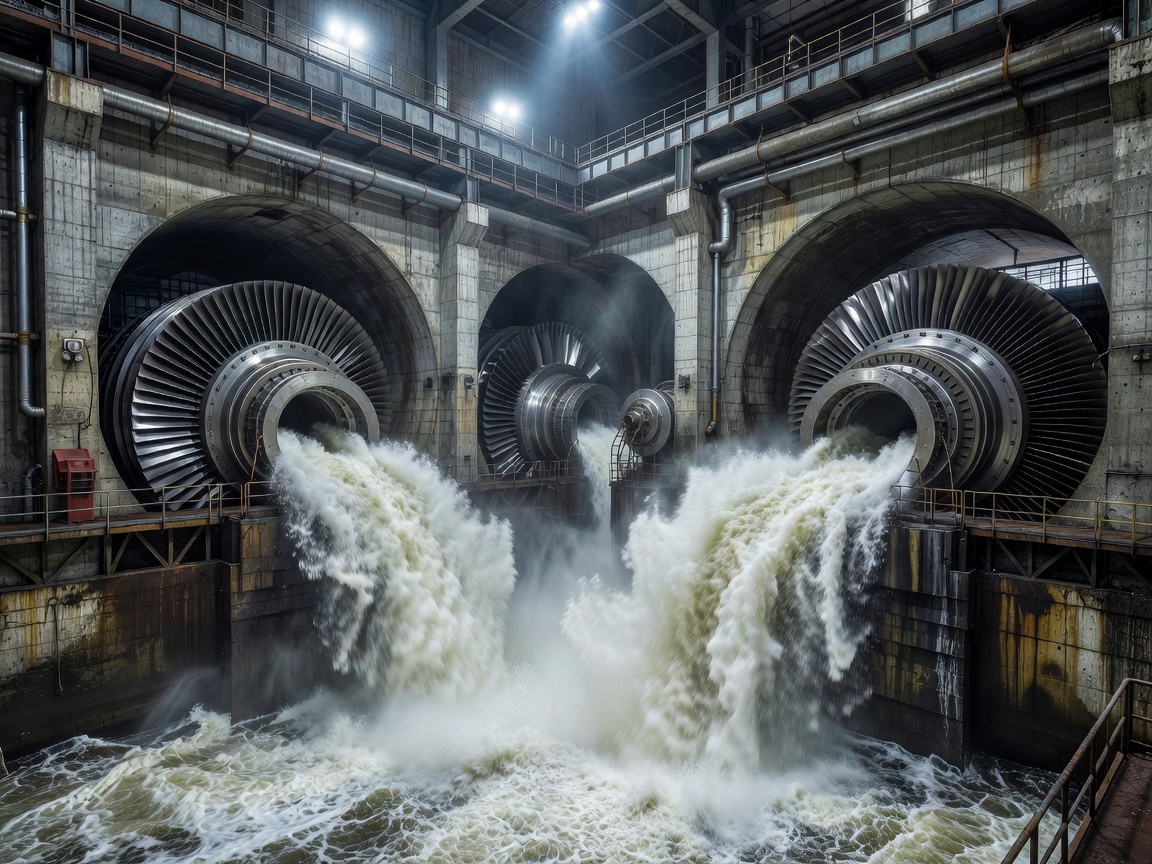
Hydroelectric power is the world’s oldest and largest source of renewable electricity. At its core, the technology is straightforward: flowing water, driven by gravity, spins a mechanical turbine connected to an electromagnetic generator. The total power output depends on two primary factors: the volume of water flow and the "head"—the vertical distance the water falls before hitting the turbine. Hydro installations are generally categorized into three operational modes: impoundment, diversion, and pumped storage.
Impoundment and Legacy Infrastructure
Impoundment facilities rely on large dams constructed across major river systems to hold back massive reservoirs of water. These high-head structures store potential energy that can be dispatched immediately to meet grid demand. The ability to abruptly start and stop water flow makes dammed hydro incredibly valuable for grid stability, providing black-start capabilities and fast-ramping load following.
However, the era of constructing mega-dams in developed nations has largely ended. Suitable geographic valleys have already been tapped, and the ecological impact of blocking migratory fish routes, altering sediment transport, and flooding vast terrestrial ecosystems is immense. Modern engineering efforts on legacy impoundment structures focus on retrofitting existing dams with fish ladders, sediment bypass tunnels, and advanced turbines designed to reduce aquatic mortality.
Diversion and Run-of-the-River Projects
To mitigate the environmental destruction of massive reservoirs, many contemporary developments utilize diversion or "run-of-the-river" designs. These facilities channel a portion of a river’s flow through a penstock or canal to a turbine before returning it downstream. Because they do not rely on large storage reservoirs, their output is entirely dependent on seasonal precipitation and natural river flow.
While ecologically preferable, run-of-the-river systems lose the dispatchability of impoundment dams. During dry seasons or extended droughts, power generation drops significantly. This lack of dispatchability limits their utility as a direct replacement for baseload fossil fuel plants, tying their economic viability closely to regional climatic conditions.
Pumped Storage: The Ultimate Grid Battery
As variable renewable sources like solar and wind proliferate, the demand for bulk energy storage is skyrocketing. Pumped storage hydropower (PSH) acts as a massive, gravitational battery. A PSH facility consists of two water reservoirs at different elevations. During periods of excess electricity generation (e.g., midday solar peaks), the surplus power is used to pump water from the lower reservoir to the upper one. When grid demand spikes and generation drops, the water is released back down through the turbines to generate electricity.
Pumped storage accounts for the vast majority of grid-scale energy storage globally. The round-trip efficiency of modern PSH systems is roughly 70% to 80%. While highly effective, developing new PSH requires specific topographies—steep elevation changes situated near robust grid transmission lines—and faces steep upfront capital costs and lengthy permitting processes.
Climate Vulnerability
Despite being a foundational renewable resource, hydropower is uniquely vulnerable to a changing climate. Shifts in historical precipitation patterns, accelerated glacial melt, and prolonged droughts drastically alter reservoir levels and river flows. Operators must balance electrical generation against competing water uses, including agricultural irrigation, municipal water supply, and flood control, making hydroelectric management a complex logistical and political challenge.